
Jedi Let Go


Jedi believe in ‘letting go’ of their attachments.

Jedi work on ‘letting go’ of their attachments and train themselves on this. The fear of loss of one’s attachments leads to the dark side, so a ‘letting go’ and ‘trusting in the will of the Force’ attitude needs to be developed gradually to overcome this fear of loss. Everything really belongs to the Force anyhow, so we need to trust the Force, and not be so attached to people and possessions.


“Attachment leads to jealousy. The shadow of greed that is” – Yoda

“Train yourself to let go of every thing you fear to lose” – Yoda


10’000 Joys and Sorrows

Buddhists believe that the fundamental cause of suffering is attachment. The premise is not solely with one religion. All of the mainstream faiths warn followers of becoming overly attached to our earthly possessions, title, bodies, relationships and beliefs. With attachment comes the fear of losing what one is attached to. Since infancy we are constantly experiencing the anxiety of anticipated loss. A child will cry when her mother leaves the room through separation anxiety. The loss of a favorite toy is a constant preoccupation of many children. They will clutch on to their prized possessions and weep inconsolably if it is lost.

As we grow we become attached to our body image and fear any harm that comes to it. Our reputation and standing among peers becomes inflated in our minds. Acceptance within the group becomes paramount. We become adults and start to attach to our identity, our beliefs and convictions. Our Ego starts to expand and we find someone whom we believe might “complete” us. Attachments form for a significant other and a partnership may be formed. We become attached to our profession, our career and the many possessions that we accumulate along the way.

As we age our ego has completely transcended who we truly are. Our children become an extension of ourselves and we see our being as intrinsically linked to our social status, standing with peers, qualifications, bank balance, lifestyle and our appearance and health. Entering into middle age we start to mellow out a little but we are set in our ways, our convictions and beliefs as well as our opinion of ourselves and others. Some of us may start to ask the important questions at various stages of our lives and even seek non-attachment.

For the most part we are caught in the paradigm and “letting go” of attachment and especially of our life is something we can barely begin to consider. We forget that all of the things that we value; all that we are attached are impermanent by nature. Any or all of them can be removed at any time. Nothing lasts forever and all things must change and eventually end. Everything ultimately returns to the Force.

There is one thing and only one thing that causes unhappiness. The name of that thing is attachment” – Anthony de Mello


The Meaning

In his book “Man’s search for Meaning”, Viktor Frankl recounts a story. During the Nazi occupation of his home city Vienna an important Academic was arrested by the Gestapo for the crime of being an intellectual and a Jew. While awaiting interrogation and eventual deportation to a concentration camp the academic protested his arrest. “I’ll have you know I am an important man in Vienna”, he proclaimed and rattled off memberships to various distinguished bodies, awards and medals of honor and qualifications. The Academic removed from a satchel a pile of papers stating his various standings and showed them to the police officer.

A German Officer standing nearby took up the papers and tore them to pieces, “There, you are nothing now!” he yelled tearing at the sheets and throwing them on the floor “You are nothing but a Jew!” The Academic was shocked. Months later deprived of his standing, his home and his family and wearing nothing but a filthy prison uniform bearing a number and stripped of his dignity the Academic died a broken man. He had lost his identity and unable to see any hope for the future, he withered and died.

When I let go of what I am, I become what I might be.” – Lao Tzu

Hope Survives

Frankl was also an Academic and a Jew. As a Psychologist he understood the power of the Ego and its ability to build up an image and drag us down with it when it is dismantled. In Auschwitz, Frankl survived in the face of atrocious odds. Frankl refused to let the Nazis take the one thing he had control over, his mind. He understood that everything he had before was probably gone. His house was probably destroyed, his position gone for ever and his wife and family probably dead. The thought of it would torture anyone but Frankl accepted it for what it was and “let go” of his mental attachment to the things he had no control over.

From one moment to the next, one day after the other, Frankl continued to breathe and live. He never lost Hope that the war would end and he would be allowed to return home and whatever was left. One Day in late 1943 the Soviet Army appeared and the Nazis fled. Frankl had survived.

We must let go of the life we have planned, so as to accept the one that is waiting for us” – Joseph Campbell


The Stoics

James Stockdale spent seven years in a North Vietnamese prison cell after his Navy bomber was shot down during a raid in 1965. Stockdale was a student of the Stoics and kept a copy of Epictetus with him during his time as a POW. The Stoic example of accepting one’s present condition beyond what one is capable of controlling carried Stockdale through his ordeal.

The attachments he had for freedom, his family and career were put aside as he focused on keeping what he did have, his mind and the choice to give up or continue. More importantly despite seven years of life lost, Stockdale carried no bitterness and no regrets seeing it as a pivotal experience:

I never lost faith in the end of the story, I never doubted not only that I would get out, but also that I would prevail in the end and turn the experience into the defining event of my life, which, in retrospect, I would not trade” – James Stockdale

The Stoics were themselves beyond attachment. Like the Buddhist precept of non-attachment the Stoics accepted what came their way with equanimity. Seneca was extremely wealthy but accepted the loss of his wealth and an order from Nero to kill himself with equanimity, even ironic humor.

Cato the younger was one of the most influential men in Rome and yet wandered the streets in simple clothing and bare feet. Removed from an important military rank during the civil war, he shrugged off the snub and rallied his soldiers around him and did his duty for the Republic.

Epictetus was banished to a desolate Greek Island by the Emperor. Instead of dwelling on his loss he started a small Stoic school. His student and later the Emperor, Marcus Aurelius, fought the Germanic tribes while his wife plotted with a trusted friend, Cassius, to bring his reign to an end. The plot was uncovered by loyalists and Cassius was killed and his wife arrested. Instead of flying in to a blind rage Aurelius forgave his wife and wept at the news of Cassius’s death.

Receive without pride, let go without attachment” – Marcus Aurelius


Letting Go

Grasping attachment and the fear of losing what was most dear to him ultimately led Anakin to the Dark Side. Not happy to simply accept things as they were, Anakin wanted to control the Force to his will and claim ultimate power, the power over life and death. In his fear Anakin lost everything that was dear to him and became a tortured servant of the Dark Lord.

“You only lose what you cling to” – Buddha

The Fictional Jedi were expected to follow the precept of non-attachment. For this reason they were not allowed to marry or have children or carry on as normal Galactic citizens might. Their commitment was similar to being in a Monastic Order or perhaps even the Army of some countries. Personal possessions were eschewed as were other attachments that the rest of us take for granted.

Obviously most of us are not going to give all of our possessions away but the clothes on our back and start to live such a life. Being sober also means being sane and rational. I for one like the things that I own. I’m not prepared to just hand them over and become a Monk, walking away from family and job. We can still loosen our attachments however.

There is no need to grasp so tightly on the things that we prize. Life need not be a monkey trap where a monkey is held fast only by its refusal to let go of a bait. The monkey can slip its hands inside the trap and clutch on to a treat but unless it lets go of the prize it cannot withdraw its hand. The monkey is trapped only by its refusal to let go. That is the nature of grasping attachment.

The root of attachment is suffering” – Buddha


Negative Visualization

A Zen Master once received an exquisite and precious porcelain cup. The item was so precious that he decided to consider it broken and worthless straight away. As a result the Master was able to keep the cup without attachment so that when one day when it did break he shrugged “of course”. No big deal.

The Stoics had a practice called “Negative visualization” which captures the Zen practice. Negative visualization recommends that we spend time thinking about loss every day. We consider losing our jobs and having the bank foreclose on the mortgage and losing all our property. Imagine your spouse leaving you or someone close dying. The Stoics suggested that parents should consider that they may never hold their children again after they have tucked them in to bed at night. As morbid as it sounds, contemplating catastrophe is an intellectual exercise and is psychologically safe as long as we do not attach emotion to our visualization. The act is not pessimism which reflects a negative outlook. If it were we would be called pessimistic for buying life or health insurance.

With daily practice we can use negative visualization to appreciate what we do have while “letting go” at little of the attachment that we tie to them. As Epictetus said we should avoid holding on to something so tight that it removes our ability to act with reason and destroys us when we lose them. The practice hardens us for the inevitability of loss.

“In short, you must remember this – that if you hold anything dear outside of your own reasoned choice, you will have destroyed the capacity for choice” – Epictetus


The Reserve Clause

The Stoics also used the “Reserve Clause” which is simply another way of framing a situation. We can always add a caveat to any statement that allows for it to not proceed to our expectations. For example we may work extremely hard in preparation for an exam or train fanatically for a sporting event. We can either attach to the effort that we put in and put our focus there or we can become fixated on an outcome which is not entirely within our control.

Despite the hours of study, we may end up getting a paper that covers areas we overlooked. On the day of our event we make some simple mistakes and loose the competition. Attaching to the goal would leave us bitterly disappointed. Having a reverse clause which says “I’ve worked really hard for this and I’ll do my best but leave the rest to fate” is one way we can loosen our attachment to outcomes.


Live Life with an Open Hand

Life can be lived from one day to the next mindfully or we can spend it in anxiety ridden anticipation of loss and catastrophe. We can spend our days clutching on to our money, possessions and life or we can loosen the bonds that tie us to this world a little. Do we hold a Dove in hand so tight that we squeeze the life out of it or do we hold it gently and loosely and willingly let it go when the time comes?


Let Go, Let God” – Anonymous

Jedi believe in destiny

Jedi don’t believe in coincidences, Jedi trust in the will of the Force and accept the fact that nothing happens by accident. Jedi believe in destiny, and that there is some method to what happens in the Universe. Things happen when they are meant to happen; there is perfection; nothing happens by accident. There is a ‘soul-plan’ for every person, but it’s hard to understand these things from our level.

(33 Jedi Traits)

Design or Accident

Is the Universe a product of intentional and intelligent design or is it simply the expression of natural laws? Does life have a  purpose or is it simply a random chance event, an aberration? Is there a destiny for all human beings, a type of Karma that has already been decided from past lives and a Divine will? Does determinism apply? What about time? Is it linear as we perceive it or circular? Do past event recur and have current events already played out? Is reality as it appears or an illusion? Are we divine being having a human experience or just evolved beings having no particular experience other than a mental one? Does the Force play a hand in our lives or are we all just here because of evolution and carry no inherent purpose at all?

For years Philosophy has grappled with these questions and come up with answers. Religion also provides answers on matters of life, death, after life and destiny. I was taught as a child that if I live a good life, say my prayers, follow the commandments and confess my sins I will go to heaven. Do the opposite and it is off to Hell.

I also learned that Buddhists believe in reincarnation and asked a Priest once if reincarnation and Karma were real. The reply I got was unsettling. Reincarnation did not exist and non-Christians were barred from Heaven. What of Dogs I asked surely they would join us in Heaven. I was assured they would not. My next question landed me in hot water; “Why then” I asked “Does the Bible say that all creatures are of God and will enter the Kingdom of Heaven”? I guess it was my destiny to let my mouth get me in to trouble.

Difficult to see. Always in motion is the future..” – Yoda

No Fate

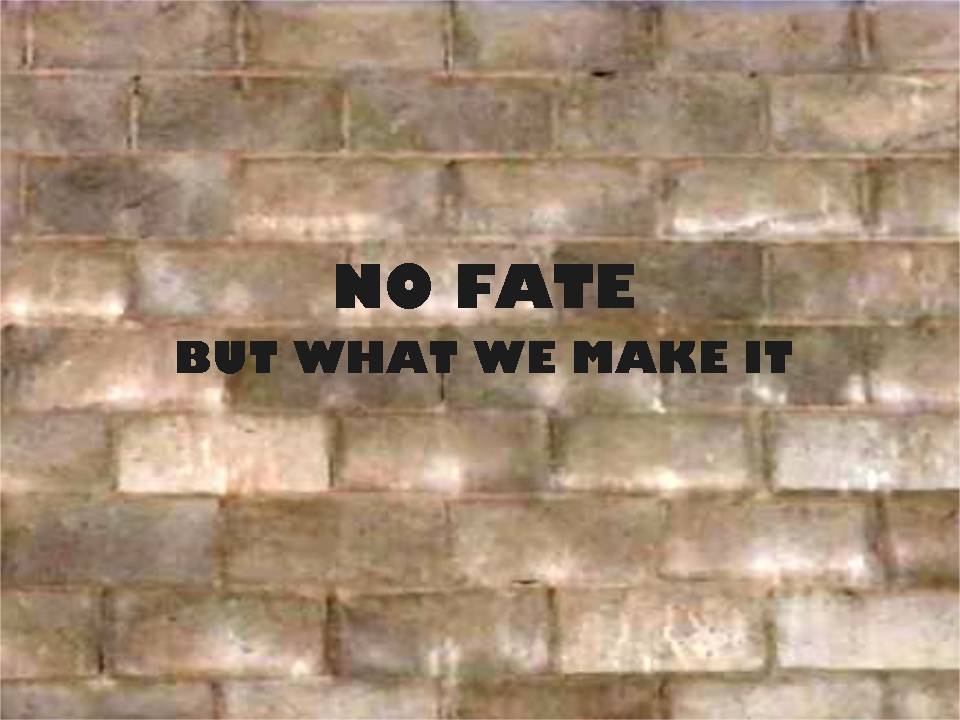
In the Terminator 2, Sarah Connor wrote “No Fate” on a table before she went to assassinate the man who would bring about the rise of the machines. It seemed that history and the future had been set and could not be changed but we know that is not always the case. The past cannot be changed but our destiny can, if we choose.

“If once you start down the dark path, forever will it dominate your destiny, consume you it will, as it did Obi-wan’s apprentice.” – Yoda

Anakin Skywalker seemed destined to fall to the Dark Side and become a Sith. Fate had played him a cruel hand and despite the efforts of Obi-wan Kenobi and the love of Padmé Amidala, Anakin could not be saved. Yoda seemed to think that Darth Vader was bound for eternity to Darth Sidious in perpetual suffering. That it was his destiny and would also be the destiny of Luke if he succumbed to his own dark emotions. We see in the “Return of the Jedi” that destiny can be changed.

“You cannot escape your destiny,” Obi-Wan tells Luke. “You must face Darth Vader again.”

“I can’t kill my own father,” Luke says, almost pleading.

“Then the emperor has already won.”

Luke chose not to destroy his Father; he cast his Lightsaber aside as well as his anger. Through forgiveness and compassion Luke released Anakin from his Karmic prison and destroyed the Dark Lord. Had Luke succumbed to his anger and killed Darth Vader he would have simply replaced him as an apprentice to Darth Sidious.

We not need follow a fateful path that leads to an unhappy end. We have the power in our hands to change our destiny and redeem ourselves. Life is not predetermined; we are not prisoners to some Fate.


Choose your Destiny

“If it pleases the Gods, so be it. They may well kill me, but they can’t hurt me” – Epictetus after Plato

A few years ago I stood teetering on a precipice and stumbled in to a dark chasm. At that moment I had a choice, my destiny had come to a fork in the road. I could continue down the path I had walked and probably continue to live a short life of fear and misery or I could grasp the hand of Faith and trust in a Higher Power to lead me down a higher path.

The choice I made finds me here today. Had I chosen the other way my life would probably be looking a lot different now. I have come to learn that Faith is not thinking “God” will protect us from the arrows of Fate but simply trusting in a process where we hand our lives over to a Higher Power and “Letting Go”. It worked for me.

Every moment we are tweaking our destiny. Each decision we make ripples through time carrying the residue of consequence. Karmic consequence is a natural law however we cannot know if Divine providence or a Cosmic Plan plays a part in our destiny. We cannot know if our actions will take us to some afterlife of bliss or burning souls.

If there is a Divine Plan and we each have a Soul Plan then it is up to us to trust the process and live out our lives as we feel best expresses the grandest version of ourselves. We cannot determine how the story will end. All we can do is play our part, accept what happens and exit the act when the time comes. Tolerance, flexibility and acceptance are also Jedi virtues, adherence to some doctrine of determinism is not.


Karma Sucks

“Karma’s a Bitch”, the guy who said it was partially hidden in shadow. The moon shone down on us and the surrounding desert was bathed in a pale light. I could see a mountain range beyond a wide plain of black volcanic rocks. Thorn trees dotted the landscape like tortured souls, bent and twisted. It was cold.

The man who spoke walked over and offered me a cigarette. I declined. My ears were ringing and I had a splitting headache. We were on guard duty, patrolling our Platoon harbor. The Platoon slept around us quietly snoring. Recon vehicles were parked in a circle like old west wagons. It was a “non-tactical” bivouac but smoking was still forbidden after a “black out” was ordered. My companion shrugged, put a smoke in his mouth and lit it in cupped hands. The cigarette flared and his face came in to view, dirty and stained with two day old camouflage paint starting to wear, stubble on his chin. His fingers were black from shooting. I could see him grinning broadly and eyeing me intently.

That day we had lost an Officer to a “friendly fire” incident. 81mm mortars were being fired in support of an assault platoon moving in to do a flanking attack on an enemy position. The mortar fire was intended to keep the enemies heads down. As soon as the platoon was in position they would give the signal and the mortar fire would be walked away from the enemy. The platoon would assault the position with small arms fire, grenades and shoulder fired rockets. Any fleeing enemy would be ambushed by another Platoon or get caught in the mortar fire depending on the direction they withdrew.

The problem was the order was somehow given to direct the mortars in to the path of the moving platoon. Two landed before someone realized the mistake and stopped the barrage. The Officer leading the assault took a piece of shrapnel and was currently fighting for his life. The irony was that this particular Officer was hated by everyone. Karma or bad luck had singled him out with an errant 81mm mortar. No one would miss him. My companion chuckled “Stupid Bastard had it coming anyway” he spat. I watched him wander away, rifle slung over shoulder, the smell of cigarette smoke lingering behind him.

There is no such thing as chance; and what seem to us merest accident springs from the deepest source of destiny” – Friedrich von Schiller


Fate is Fickle

I wondered about what he said. Was it Karma; a merest accident from the deepest source of destiny? The support platoon firing the mortars didn’t work with this Captain. They didn’t have to put up with his incompetence and decisions that made no sense and made everyone’s lives miserable. One of the Grunts had taken a fragment in the eye but was otherwise fine and had to be evacuated with the Officer. A few other guys had light wounds and were kept in the field. I personally felt it was poetic justice what had happened to the Captain but had divine fate played a hand?

A year later I ran in to the Captain. He was in my new Battalion. He had made a full recovery and was not only his old self, he was worse. The Brass had also decided to give him a medal and he was now a Major and on a career fast track. I thought of all the hundreds of miserable saps that he would command in the future. How many careers would he trample over to get his way. The accident had been a boon to his career. Yes, Karma really does suck.

Not long after I was court martialled and discharged for a drunken spree that included a pub crawl in four different countries and a run in with the police. I had been AWOL and it was not the first time. Karma strikes again.

Fate is a fickle bitch who dotes on irony.” – Glen Cook “The Black Company”


Breaking Samsara

Karma is an Eastern belief that differs to the “Heaven or Hell” coin toss of western religions. I say coin toss because some people still believe that masturbation will condemn a person to hell. I don’t believe that. Karma might suggest something different for that “sin”, like indifference. Hindus and Buddhists believe that we are in Samsara, a constant cycle of birth, death and rebirth. Where we end up in every life is largely decided by how we conducted ourselves in former lives.

We all have a chance to break that Karmic cycle by living virtuous lives or as the Buddhist suggest, taking the noble path. With more virtue and right living we get more Karma credits. Get enough and we are on our way to the end of Dukkha (suffering), we achieve a state of transcendence and arrive at “nothingness”. Simply put Karma means actions have consequences. We largely decide our own soul journey of endless lives through our actions. Determinism does not play a part.


No one gets out alive.

The weird thing is that every turn in my life which has seemingly appeared “bad” has turned out for the best. An unexpected life changing event occurs which sets us on a new trajectory. We end up in places and in situations we could never imagine. Sometimes fate appears to carry such design that we cannot help but wonder if we are exactly where we are meant to be despite the resistance we put up getting there. Is it fate or serendipity? Do we have a “Soul Plan”? Perhaps destiny, fate, free will and chance are all combined under some Cosmic Plan. We each have a destiny but it is ours to change it through Free Will.

Simple luck would explain a lot of injustices in the world. Perhaps someone is looking over us. God knows I should be dead fifty times over with some of the dumb shenanigans I have pulled over the years. Eventually my luck will run out.

One thing is for sure, I’m glad I was standing in the right place, at the right moment and was shielded from the blast by that Captain when the Mortar round hit. I like to think there was a reason for that.

“How people treat you is their karma; how you react is yours.” – Wayne Dyer

Jedi practice Lightsaber


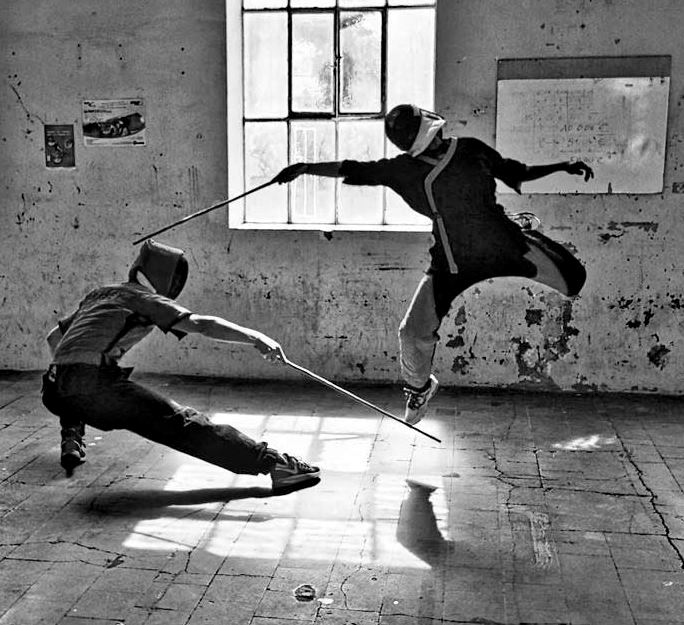
Lightsaber dueling is the Jedi’s sport of choice.

Jedi duel with lightsaber replicas to practice living in the present moment. It’s hard to think about the past or the future if you are dueling with a lightsaber! Lightsaber practice actually has a multitude of benefits. Dueling helps improve a Jedi’s coordination, flexibility, and balance because when dueling with a lightsaber, it becomes an extension of you. It’s a good form of cardiovascular exercise too. The real lightsaber only exists in the Star Wars Universe, but for the Jedi the lightsaber is a powerful symbol that represents alertness, mindfulness, agility, discipline, skill and living in the present moment.

(Jedi 33 Traits)

Elegance and Power

Mention Jedi and the first thing that comes to mind is the beautiful and elegant Lightsaber. The primary weapon of defense of the Jedi was a symbol of the order for thousands of years. The Lightsaber was also lethal and bought the Jedi close to their opponent.

Unlike a blaster or a support weapon a Jedi had two choices with the Lightsaber. They could deflect lasers back to their origin striking the opponent alternately they used it as a sword. The Jedi would close in and bring the Lightsaber to the enemy.

A Symbol

The Lightsaber was also a symbol of hope and light. When Lucas invented the Lightsaber perhaps he intended it to be a symbol of the chivalry, courage and decorum of the Jedi. Throughout the Star Wars saga the Lightsaber remains the most poignant symbol of the struggle between good and evil. The Lightsaber inspires awe and wonder as much as the swords of the old Knights did during the Middle Ages.

(The Lightsaber) is the weapon of a Jedi knight. Not as clumsy or random as a blaster. An elegant weapon for a more civilized age. For over a thousand generations, the Jedi knights were the guardians of peace and justice in the old Republic. Before the dark times. Before the Empire. – Obi-wan Kenobi “A New Hope”.

There is no such thing as a Lightsaber in our Universe, at least not yet. Even if it were created it is unlikely to be used as a close quarter weapon for the simple reason that anything that gets close to a Lightsaber gets burned. It would be too dangerous to wield. Real world Jedi use replicas and schools have sprung up in Europe and the United States that teach the art of Lightsaber dueling.


French Cane Fighting

I don’t train with a Lightsaber replica, in fact I don’t even own one.  Fortuitously my martial arts uses a weapon of defense which is as elegant but far less conspicuous than the Lightsaber; the humble cane.

Cane Fighting is an integral part of the French martial art called Savate. The cane was historically used as a training device to teach Officers in saber fighting. With the banning of carrying swords and long knives by the French Emperor the public adopted the cane as a suitable alternative. The cane became an accessory to the French gentleman. Across the channel the British caught on. Canes with hidden blades were sold, some could fire a small caliber round as a last resort.

Today we seldom see people in the street with canes unless they are infirm or elderly. The cane is still taught as a form of defense along with other stick forms however it has limited use as an able bodied person carrying a cane would likely attract as much attention as a person wearing a robe and replica lightsaber.


Rapide, Aesthetique et Lethale

My first cane lesson went like this. I was taught the “salute”, “en garde” and the basic strikes, blocks and feints. Then there were the basic foot movements, advancing, moving side ways, retreating. In cane fighting one is always moving, never stationary. It is similar to fencing but far more dynamic.

The French have a codified version in which points are awarded for “touches” and which illegal moves are penalized. The street version (Canne de Defense) however mixes cane strikes with lethal booted kicks and sweeps, grappling, holds and punches. When the opponent is down the handle can be used to pommel the opponent until he is senseless. The hook of a walking cane can be used to lock, hold and sweep an opponent.

The sport known as “Canne de Combat” is probably the closest thing I have encountered to Lightsaber dueling. It is fast, fluid and requires aerobic fitness, agility, stamina and presence of mind.

The cane has served to remind that one should always lead with their sword hand and sometimes it is smarter to “riposte” than “lunge”. It is also handy to know when to withdraw. These lessons are useful in other areas of life as well.

Verbal Fencing

“The words of the reckless pierce like swords, but the tongue of the wise brings healing.

Proverbs 12:18


Our words are also like Lightsabers. They can do harm or bring light and healing. We can us our words to rally people together or we can use them to create rifts and division. Words are powerful. We must know when we use our words that they may cut as deep as a Lightsaber. They may wound others but also ourselves.

The art of communication is mastered over time and with many mistakes. It seems simple enough though. One person speaks, the other person listens and responds.

An ideal exchange involves active listening with feedback and validation. Listen without judgement and keep silent resisting the urge to cross talk. Speak clearly using unambiguous language and are conscious of nonverbal cues such as body language. Seek understanding and we provide the listener with the chance to make their case. Accusations without evidence and value judgements are avoided. Focus on the issue at fault not the person.

Words are like swords, if you use them the wrong way, it’ll turn into ugly weapons.”  – Gosho Aoyama

Sheath your Pride

When we communicate be mindful of Verbal Fencing. In the past I could not stand to be corrected and contradicted. A divergent opinion to my own would spark disagreement, argument and resentment. In recovery I have learned to swallow my pride and avoid tit for tat exchanges. An argument should remain objective and not intended to hurt. There are no points for “touché”, “riposte” and “counter attack” in an argument. No one wins in a bout of verbal fencing.

Always remember that the tongue is the only part of the body which gets sharper with use.


The Lightsaber within

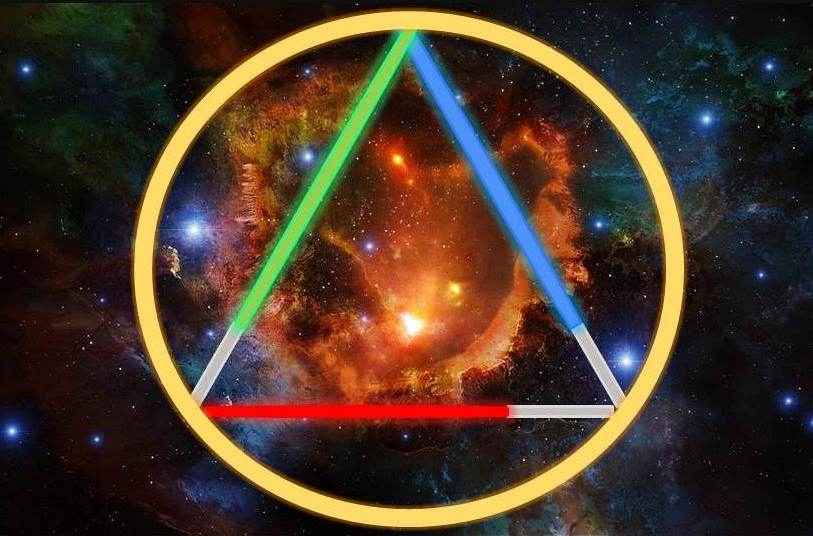
We may not carry a Lightsaber on our belt but we can carry one in our heart. For me the symbol of recovery is three lightsaber joined in to a triangle and surrounded by a circle. The Lightsabers represent Humility, Respect and Temperance, the circle represents Faith. These are my cardinal principles which I measure myself against. They are my swords with which I use to recover and improve every day.

What is your Lightsaber? How do you use it?

 “For the word of God is alive and exerts power and is sharper than any two-edged sword and pierces even to the dividing of soul and spirit, and of joints from the marrow, and is able to discern thoughts and intentions of the heart.” – Hebrews 4:12

Jedi stay physically fit

Jedi stay physically fit for many reasons.
Jedi stay physically fit in order to accomplish their mission in life. Fitness is a part of Jedi philosophy, but the level of fitness depends on the individual. Fitness effects your mental health and over-all well being.

(33 Jedi Traits)

Jedi Fit

Jedi Philosophy is one of the few practical philosophies eastern or western outside of the martial arts which have a strong emphasis on the importance of physical fitness. Most other philosophies focus on the mental and spiritual state of the individual and overlook the holistic nature of the being must encompass the body. Jedi Philosophy considers spiritual, mental, emotional and physical well being. A holistic approach is taken that focuses on each element. To focus on the spiritual or the mental without training the body is counter intuitive to the Jedi. The elements are treated as one.

For obvious reasons the physical fitness was important to the fictional Jedi. The physicality of the Jedi trials is an example of the level of fitness required to be a Jedi. Light sabre combat skills and the ability to move quickly and with instinct were all part of Jedi training. The Jedi had incredible endurance. If we compare the fitness of a fictional Jedi to the real world we would have to look to professional athletes or top tier elite special force operators to come even close.


(Source: Lucasfilm)

Get Motivated

Obviously few of us are going to aim for a supreme level of fitness to the level of an elite athlete or a SF operator. For a start most of us don’t have the time to dedicate to that level of training. We also don’t have professional instructors, nutritionists and allied medical professionals like physiotherapists and exercise physiologists to support our progress. That’s no excuse though. Many of us sitting on the couch right now or eating a doughnut in front of the computer know we can do something for our health and fitness.

At this minute I am glancing out the window looking at the sky for the tell tale signs of rain. I’m asking myself “is it going to rain? Should I go to the park to train?” The problem many of us is motivation. Body may be willing but mind makes excuses. If we can get our mind willing, the body will follow.

Keep it personal

I can share my fitness regime but it’s not for everyone. Most of what I do is a mixture of Army PT meets Street Workout. I run once or twice a week up to 5 miles and train most days doing body weight exercises. Occasionally I do free weights in a gym or a session of high intensity interval training which is a series of exercises followed by kickboxing on a heavy bag. The regime works for me.

How you choose to keep fit is up to you. The American Heart Association (AHA) recommends a minimum of 5 days of moderate intensity aerobic exercise for 30 minutes or more such as walking or light exercise. More vigorous or intense aerobic exercise should be undertaken 3-4 days a week for 25 minutes.

The AHA also recommends 2 sessions a week of strength building activity. These are guidelines and individual programs will vary depending on age, overall health and personal goals. If you plan to run a marathon your fitness goals and training will differ to starting a weight lifting regime to bulk up or lose fat and put on lean muscle.


Just Do it

Physical exercise for me has been a panacea in my recovery along with the 12 Steps. When I got sober I was hypertensive and overweight.  I looked unhealthy. With exercise I started to get my blood pressure and weight under control and the activity made me cope better with the symptoms of withdrawal. Exercise has kept me sane as well as fit. Some days I just want to get away so I will go for a run.

Exercise allows us time to process our emotions and clear the mind. Endorphins are released and we feel better. Our mood starts to improve and life becomes more enjoyable and fun. Park Run is an example where running brings both fitness and social benefits. You can meet people and have fun. Who needs a bar to meet people unless its the local park pull up bar?

The health benefits of physical exercise cannot be understated. Exercise will not only change your life it might even save it and give you decades of quality life to look forward to.

These days I am as fit as I was in the Army around 25 years ago. Age is an illusion as are your self imposed limits. Men and women of all ages and body types can turn their life around by simply deciding to take action. Every day I see incredible results and lives transformed. The ball is in your court.

Ok the sun is out and I have time to do something. I’m off to the park to get some reps in on the bar. Get moving Jedi!

Jedi avoid acting on Anger

Jedi avoid acting on dark side emotions like fear, anger, aggression and hate.

We can’t control which emotions we will feel, but we can always choose to control our actions. We might feel anger from time to time, but we don’t have to act on that feeling of anger or rage.


A Sword

Anger is a double edged sword. The emotion is primal and inherent in our nature. Anger triggers an adrenal reaction in the face of a threat. As a biological creature we are primed to use anger to compete successfully and to survive. As a rational human being anger also serves to motivate change. For example, revolution is a societal reaction to common anger. Had it not been for anger among the masses there would never have been a French Revolution or an American War of Independence. Both historic events ushered in a world hunger for social justice and democracy. Anger can be beneficial, even essential to the human condition.

Controlled aggression is the tool used in the Martial Arts and by Soldiers to counter and defeat an opponent. There is a line between controlled aggression and cruel savagery. As Jedi we know not to cross it. Sometimes that line becomes blurred and we risk crossing in to the darker side of our natures.

Anger is a short madness.” – Horace


A Madness

Holding on to anger is like grasping a hot coal with the intent of throwing it at someone else; you are the one who gets burned”- Buddha

I have seen the other side of the anger. There is a reason why it is one letter from Danger. Anger is a poison which does more damage to the vessel which carries it than on which it is poured.

Unfettered anger can lead us to do terrible things. It can cause us to make the greatest and most memorable speeches we will later regret. In moments it can destroy a lifetime of effort, love and creation in a torrent of catabolic rage. In the biblical parable it was jealousy which turned Cain against Abel but anger which led to murder. Anger has been the trumpet call for countless wars, genocides and murders. The madness continues unabated.


Born to Anger

Fear leads to anger, anger leads to hate, hate leads to suffering” – Yoda

The character emotion of Anakin through the prequels was Anger. Anakin was angry at fate and what it had put his family through. For years he held resentment against those who had enslaved him. Anakin hated himself for being unable to save his Mother. Eventually the Jedi became his object of anger and hatred. The dark emotions consumed him and carried him to the Dark Side where he submitted to Darth Sidious and suffered as Vader.

I inherited my Father’s anger as he inherited his Father’s before him. Anger runs through the paternal side of the family. It is an emotion embedded in our make up and carried in our souls. They are an angry people made to suffer in the crucible of the heart of the Balkans.

Centuries of war and occupation by brutal Ottoman occupiers who enslaved the population, forced conversions and removed children for the Janissary was passed down from one generation to the next as a deep anger and bitter hatred that fueled ethnic and religious divisions, war and genocide.  I saw that country explode in to war in the early 90’s and was horrified by the expression of raw anger and hatred between former neighbors and friends.

The pure savagery of the war still haunts me to this day. Entire communities on all sides were wiped out. Whole families snuffed out including relatives. I lamented the war but I understood the anger that fueled it. That anger was in me like some curse. It still simmers there in that old country.

“How much more grievous are the consequences of anger than the causes of it”. – Marcus Aurelius


A Heavy Burden

Anger took me to alcohol and kept me in her clutches. The promise that it would ease the pain of loss and history were false. Alcohol made it worse. Anger and seething resentment cast a dark cloud over the brightest days. It would simmer and occasionally boil over.

I lived in perpetual fear at what I might do if it exploded in to blind rage and consume the people around me. The memories of seeing anger and hatred in its worst shades would haunt me. My own anger lay brooding within and it remains there to this day buried deeper than it was before.

Men in rage strike those that wish them best” – Shakespeare


Its not Enough

Being sober is one thing. Everyone thinks that abstaining from alcohol is enough. Everything else must fall in to place and life will be rosy thereafter. Nothing could be farther from the truth. Take away our substance, our addiction and we lose our physical crutch. The spiritual must fill the hole that is left behind otherwise it is soon replaced with fear, anger and hatred. This is exactly what happened to my Father.

An alcoholic, my Father quit drinking and became a dry drunk. Unable and unwilling to accept the self honesty and humility required, my Father’s anger and hatred consumed him. At times his anger would terrorize and control I and my siblings. We lived in fear of physical and emotional harm.

That anger drove us away. One later took his own life, the rest of us survived as best we could. My Father later died with that anger a skid row drunk, alone and embittered. We still carry that ancient anger within us but we chose to stop the cycle. The anger will not be passed on. There is no need for the sins of the Father to be visited on the son. Love heals anger.

If we were to live, we had to be free of anger. The grouch and the brainstorm were not for us. They may be the dubious luxury of normal men, but for alcoholics these things are poison.”

— Alcoholics Anonymous


The Red Flag

Anger is a red flag for the recovering alcoholic for everyone else it is the “convenient emotion”. Of all the emotions which will carry me back to drinking and using, anger and resentment are the most dangerous.

I still get angry. It is a normal emotion and a normal reaction to certain situations in life. We would be foolish to laugh off something that any normal person would claim righteous anger. The difference is that we choose how to respond to anger as we do any other emotion. That’s a normal response to anger.

Do we act out our anger in destructive ways or do we carefully consider a proportionate response knowing that forgiveness and compassion might be one option. If anger visits us for trivialities such as a minor slight like a rude remark or a spilled drink do we allow it to affect our mood or simply brush it off as an event not worth an elevated heart rate?

Know what ticks you off. Manage your response to those triggers. Take time out when you feel your anger rising and find ways to stay calm and in control through relaxation and mindfulness techniques. Seek professional help if anger is derailing your life and relationships.

Remember Anger is our birthright as a species. It will serve us well if we use it wisely. Anger can also be terrible tool capable of the most heinous acts. Whether we use Anger to build or destroy bridges and light wild fires is largely up to each of us. The world is a very angry place now and mostly for the wrong reasons. Do we add to that global anger? We all have a choice in how we use this blessing and curse of being human.

The sharpest sword is a word spoken in wrath”. – Buddha

Jedi have patience

Jedi choose to act with patience, and not to react with anger.

(33 Jedi Traits)

Patience..

Patience is a virtue. How many times have we heard it? The times we want to jump the gun and rush headlong in to something without a second thought. We can’t stand waiting for anything we think worth having now. It can take real presence of mind and self discipline to take a step back and patiently wait.

Patience is what we exercise when we listen to people when we want to speak. It is being able to sit when we want to stand. Being patient is willing to wait for our turn and graciously letting others go before us. Patience is knowing that things often happen in their own time and we must allow for that.

“Patience my young Padawan” – Yoda

 Learn Patience

In The Empire Strikes Back, Yoda encounters Luke Skywalker who has crash landed on Dagobah and is seeking a Master Jedi, a great warrior. Luke is brash, rude and impatient and has little time for Yoda’s antics and gets frustrated in Yoda’s hut. All at once Yoda speaks to no one in the room “I cannot teach him. The boy has no patience”. A disembodied voice responds;

The boy will learn patience” – Obi-wan Kenobi

Patience is a virtue and a discipline. It is the simplest lesson to learn but the hardest to practice.

I was always impatient in life. Whether it was people, place, jobs, circumstances, money, relationships there was never a time other than the right now. Bar attendants were never quick enough with service. A plane that was running late was a unforgivable inconvenience. Subordinates who could not deliver on time were useless. People I instructed who failed to catch on quickly were stupid. Someone who took their time explaining something was not worth the time. There was a perpetual sense of urgency and impatience. I had to be getting, going or being right now. No time to wait.

“Do you have the patience to wait until your mud settles and the water is clear. Can you remain unmoving until right action arises by itself” – Lao Tzu

Are we there yet?

One of the most important virtues we learn in recovery is patience  with our selves. It pays to understand that progress takes time. Often the journey to that destination makes it all the worthwhile. A long rain that soaks in is far better than a fast and heavy rain that washes off.  I have found that trying to rush my physical training leads to injury. Attempting to achieve milestones without taking enough time leads to failure and frustration. So it is with most things.

In recovery we take it “one day at a time” and handover the outcomes of our efforts to our Higher Power. To try to rush emotional and spiritual growth only leads to disappointment and frustration. Lack of progress or failure in one area can lead to despair or anger and force us to make reckless decisions.  Progress, not perfection should be the key. Take it slow and steady. Give yourself time.

No great thing is suddenly created” – Epictetus

Show people the same courtesy and patience that you expect from others. Especially those that are further back in their life journey. They have a lot to learn and we can help and guide them on the path. We must also learn to be patient with people who are rude, obnoxious or obstinate. There was a time not long ago when we were like that and were given allowances. We can be patient and respectful with others no matter who they are. Our principles and our self esteem must also be respected. We are no one’s s door mat.

Be patient, be Jedi

Next time you find yourself getting impatient with someone or are sitting in traffic ask yourself the following questions:

  1. Why am I impatient?
  2. Is it worth the stress?
  3. Can I do anything about it?

The answer to the first question will reveal that the situation is largely out of your control. You probably can’t do anything to make the person change and the traffic jam exists despite your frustration. The first answer should lead to the second answer which should be no unless it is a “life and death emergency”. If there is nothing that can be done about it, why get angry?

If the last answer is yes then consider that option and take action. Otherwise give the person time or space and take time out yourself. Allow yourself to move through the traffic. Eventually it will clear. Deal with any consequences as they arise.  Lastly  take deep breaths and smile. What’s the hurry?

Jedi are Positive

Jedi believe in practicing awareness and are mindful of their thoughts. Jedi keep their thoughts positive. A positive mental attitude is healthy for both the mind and body. Not every thought that ‘pops’ into our head is actually ours, since thoughts can originate from many sources across the Universe, and not just from our physical brain. We have to be able to discern the thoughts and remove the bad ones or negative, fear-based ones. Even the food we eat, and things we drink can influence our thoughts. So, we must always be mindful of our thoughts.

Jedi Optimism

In the Clone Wars episode “The Blue Shadow Virus” Anakin is becoming agitated as it becomes clear that Padme and the entire planet of Naboo may be in grave danger from a biological weapon unleashed by the Separatists. Obi-wan Kenobi watching Anakin tie himself in to knots of anxiety wryly points out that Anakin seems a little “on edge”.

There’s a good chance we’re about to destroy all life on this planet including ours and the senator so yes I’m a little on edge, why aren’t you?” replies Anakin with exasperation.

Obi-wan Kenobi shrugs nonchalantly, “I’m better at hiding it”.

Obi-wan always reserved optimism. Even when faced with a hopeless situation he never gave up hope and it showed in his attitude. Obi-wan was realistic but never defeatist. Anakin on the other hand could be positive but was easily drawn in to a negative outlook at the expense of reality.

Jedi Pessimism

In the Clone Wars The Jedi Master Pong Krell switched sides. Arriving on Umbara during an assault to take the capital, Krell relieves Anakin who has been ordered back to Coruscant. Krell takes command of a battalion of the 501st and begins to undermine the mission. The Clone troopers under his charge eventually discovered the deception and mutinied. They manage to restrain the Master Jedi after many Troopers are killed in the attempt to capture the traitor.

When asked “why” the Jedi Master revealed that the Republic’s efforts are futile and he was going to save his skin and become Count Dooku’s apprentice. Pong Krell had lost confidence in the Republic and his pessimism at their chances forced him to abandon the Jedi Code and sway to the Dark Side. This is the nature of chronic pessimism.

The Power of Positive Thought

Over sixty years ago the “Power of Positive Thinking” became an international best seller. The premise of the book was that each and every person has the ability to completely transform their lives simply through the power of positive thought. This was hardly a new concept. The philosophy had been around for thousands of years. The Buddha revealed to his followers this profound fact over 2500 years ago. The ancient Greeks and Romans were tossing it about between the different philosophies of the day even before Socrates spoke about it. The early Christians preached of the power of the mind to transform one’s life through simple belief and Faith. The idea of miracles is largely one of the power of the mind over the body. If we truly believe we can be healed, so we shall.

Speak to any Doctor and you will be told that diagnostic medicine works most of the time. That most of the time is due largely to clinical trials undertaken to prove drugs and treatments. Some diseases like cancer provide Oncologists with a challenge in that science has not quite nailed a cure. A person identified with Stage IV lung cancer is likely to have a low rate of survivability even with treatment particularly if the tumor is aggressive. Doctors are now finding that patients who have grit, determination or abiding faith can at times turn these odds around and “demonstrate modern day miracles”.

Doctors will also tell you that treatment of any disease and the healing process is a team effort. The conscious patient is not just a passive subject but an active participant in their treatment and recovery. The Patient is expected to be compliant with the treatment plan. If a course of drugs is not taken as ordered or instructions are not followed then the Doctor cannot be held accountable for lack of progress. The Patient must also bring a willing and positive attitude to the table if they are to stand a chance of full recovery.

In a dark place we find ourselves and a little more knowledge lights our way” – Yoda

Think and Heal

Very often we hear stories of people who have been given a hopeless prognosis. Some are given months or a few years to live. Yet their sheer will to live and their “can do”, “never say die” attitude not only keeps them alive but in some cases leads to complete recovery. Ask any but the most closed minded Doctors and they will tell you that a patient’s positive attitude is a crucial element in the successful outcome of a case. Some people think themselves into illness. Some patients think themselves worse and sabotage their recovery. Recovery is a mental as well as a physiological process.

The Canadian Medical Association Journal published a study that backs the “mind-body connection”  with hard science1.. Optimistic and confident patients who went in to surgery fared better than those who went in fearful or pessimistic about their chances. Post-operative pain was also lower in patients who were positive and more proactive in their recovery. In another study optimism and a positive outlook was also correlated with long term health and quality of life2.

The “woe is me” cohort were found to have more dependency on treatment and pain therapy and lower success rates to full recovery. In the past Doctors would refer anything they could not touch, hear or feel and measure to the “Psych” department. Increasingly Doctors are talking to their Patients about the importance of having a positive attitude. Meditation and relaxation exercises are encouraged along with affirmations and visualization.

 “In order to carry a positive action we must develop a positive vision” – Dalai Lama

The Operation

Some years ago I had a large non-malignant tumor removed from my head. The mass if it had been allowed to continue growing would have have been fatal. The Doctors were honest about the surgery and the potential outcomes. I was going to lose most of my hearing. There would be disfigurement and facial palsy. My eye sight would like be badly affected as well as balance. It would be months before I would be fit to return to work and I’d probably never have the same quality of life again. There would be chronic pain. The upside is I’d get to live for a few more decades.

The operation went ahead. I walked out of hospital and was back at work four weeks later. Within a few months I was back to full fitness. The palsy and eye issues were there but I was alive. The Doctors were surprised by the progress and stated that it was my drive and determination to get better that accelerated the healing. A positive attitude on my part had made their job a lot easier. They did the medicine, I did positive attitude. I got better and went back to work.

If you change your mind your conditions must change too. We are transformed by the renewing of our minds.” – Emmet Fox

Stinking Thinking

While this disease had been easy to lick my problem with the other disease, alcoholism, was not so simple. Alcoholics have a way of self inoculating themselves against a mental attitude adverse to drinking. Where alcohol is concerned we become completely irrational and unreasonable. Our mind is hijacked by a deeper need than self preservation.We sabotage ourselves mentally.

Several months after my life saving operation I was wondering what was the point of being granted a second chance. I was frustrated with the pain and discomfort. My eyes watered or were too dry, I had headaches all the time and I was conscious of the palsy. Alcohol became a release. I had stinking thinking.

As the depression set in so did the anxiety and the resentment. Fear leads to anger leads to the dark side. I was losing my mind and as I spiraled downward there seemed to be little hope. Would it have not been better if that tumor had killed me rather than let me live through this suffering? I seemed to be sinking in to some kind of deep hole and into a morass of self pity, despair, anger, sadness and lingering insanity. I could not muster the bravado which had helped me recover after surgery. Why was that?

Waking Up

It was a simple and feeble call for help. A flimsy reed was offered and I was raised up out of that pit. I can remember the experience but it is hard to describe. My call for help was a surrender, a submission to some power. Something washed over me and I felt like a light flared within. The sensation was overwhelming. I knew at once everything would be alright. There was no need to worry ever again. My compulsion to drink was gone and it has never returned.

For a few weeks after I rode a wave of spiritual and emotional high. I embraced the ethos of recovery and set out to better myself. In the span of two months I worked through Steps 1 to 9. Such was my attitude that I was able to achieve all the goals I set myself. A positive attitude was paramount in early recovery. Since then I have discovered that attitude is a choice. We can choose to adopt a negative attitude or a positive attitude to almost any situation. It’s what we make it.

Perpetual optimism is a force multiplier” – Colin Powell

Get Positive

Having a positive attitude does not mean we dance as Rome burns down. It means taking a realistic view of life by taking control where we can and accepting that some things are out of our control. Even in the face of a unwanted events we can still be cautiously optimistic. To fall in to despair or a cycle of negative self talk  solves nothing, it makes it worse.

Things will happen in life which broadside us in completely unexpected ways. We received bad news and we ask how can anyone be positive. I recently learned that someone close to me has lung cancer. The person is very ill but not terminal and is fighting the disease. I try to present a positive attitude every time I see him. It is largely up to him to decide whether to be pessimistic or optimistic about his chances.

When others are down we can help them raise their spirits. No one need carry the load themselves. We cannot take the cancer or the disease and carry it for them because we are stronger but we can help carry them through the rough times. As Samwise Gamgee said to Frodo on the slopes of Mount Doom as the Ring Bearer lay on the rocks unable to go any further “Come on Mr Frodo, I can’t carry the ring for you…..but I can carry you and it as well. So up you get!”.

Be mindful of your attitude. The frame of mind that you take in to almost any situation will affect the outcome. A positive attitude can achieve almost anything, even miracles.

Men are disturbed not by things but by the views which they take of them” – Epictetus

1.http://www.webmd.com/balance/news/20010727/power-of-positive-thinking

2. http://www.cmaj.ca/content/186/4/E150

Jedi practice meditation

Meditation is clearly a part of the Jedi lifestyle. Jedi believe that a calm mind can be achieved through meditation and contemplation. Jedi need to meditate often in order to clear their minds. Our minds, like sponges, get contaminated from the world, and need to be cleaned out daily. We even absorb things from those who are around us, and from our environments, the food we eat, etc. so it’s important to keep a calm, focused, clear mind and to meditate daily.

(33 Jedi Traits)

The Finger at the Moon

When we think of the Buddha we imagine a spiritual person sitting in a lotus position meditating. There is a serene expression on his face. The image captures a sense of peace, calm and equanimity. Nothing could disturb that state. Meditation is like a peddle in a pond but it also a rock in a sea of chaos. By sitting we clear our mind of the noise and pollution of the day. Meditation allows us to unify body, mind and soul for a short time. We are unified with our true state of being.

Quiet the mind and the soul will speak” – Bhagavati

To Jedi the practice of meditation is more than a daily practice or a discipline. The Jedi use meditation and contemplation to better understand the nature of the Force and to seek connection with the Force that resides within. The fictional Jedi are often presented in the state of meditation. Yoda levitating above a forest floor, Obi-Wan Kenobi cross legged with eyes closed and head tilted slightly forward, his back straight and hands cupped before him is how we imagine it. Yet meditation need not seem mysterious or mystical. It is not the sole domain of Monastics, Warrior-Monks and Mystics.

“You will know (the good from the bad) when you are calm, at peace” – Yoda

When asked to explain the moon, an old Zen Master pointed at the moon. Meditation is not a secret esoteric practice, it is simple and available to all. The reason to meditate is to bring us body, mind and soul to the present moment and to who we truly are.

Escape

I have to admit I have tried to practice meditation since I was a child. For me it was an escape from reality. It took me to places of peace and tranquillity. Laying in bed I would focus and on the breath. I would let go and seemingly be transported to another realm of consciousness. It seemed that I was being projected through space. Entire galaxies and bright nebulae arched past me as vivid as if they were real. I felt as if I were separate from my body and would soon open my eyes and find myself back in my room. An energy would resonate through me. I felt I had been gone for hours.

Through my years of active alcoholism I tried to recapture that magical sensation of being completely aware of my inner and outer world. I wanted to project my consciousness to another dimension as I seemed to have done as a child. There was a peace, a holiness there. Something pure and serene. It felt like home. Booze let me escape from reality but there was no answer there just more suffering.

“I meditate so that my mind cannot complicate my life” – Sri Chinmoy

Meditation is not about escape or withdrawal from life it is about being completely in engaged in life. It is about knowing our selves.

Learning to Breath

As much as I tried I could never meditate again. My mind was agog with thoughts and activity. The noise was too loud. My emotions bubbled under the surface and could not be ignored. Every time I tried to sit I found that negative thoughts and images would intrude and grow stronger as I fought to remove them. My breath was all other the place. I could not even breath normally. It was pointless and the only time I imagined some success was when I fell asleep.

Meditation is easy but it also very hard. For me it was like learning to breath correctly after a lifetime of doing it wrong. Many of us in recovery know the benefits and we practice meditation because it helps us cope. We sit every day. Some days we can manage a few minutes of Meditation without succumbing to a train of thought other day we can last for 20 minutes to an hour.

Meditation is not zoning out as some would believe. It is being completely aware of what is going on inside and outside of ourselves. We are allowing our body to sleep while our mind is completely awake. Meditation is an active process of focus and attention. Contemplation is meditating on the Divine self. This requires effort and practice.

“True meditation has no direction or goal. It is pure silent prayer” – Adyashanti

Seek though Meditation

The 12 Steps suggest meditation as a way of building a solid foundation to our recovery. How we meditate or contemplate our Higher Power is up to each of us. The idea is that we devote some time daily to the practice. The benefits are emotional and spiritual balance and stability.  We can meditate to music, a meditation chime or simply by following the breath. Some people use a mantra to help them focus. I use “calm, at peace, passive”, each word follows the other with the breath. “I am one with the Force and the Force is with me” is another mantra that I use to help connect me to the Force.

Sought through prayer and meditation to improve our conscious contact with God as we understood Him, praying only for knowledge of His will for us and the power to carry that out.” – Step 11

Practice

Meditation is a personal practice. Each person will find a different way to sit in meditation or contemplation. It can be done lying down, sitting, in a lotus position or even walking. Lying down may bring on sleep and the lotus position can be painful. Use a straight back chair and sit upright with both feet on the floor and hands crossed on your lap. With head tilted slightly forward get comfortable and take three deep breaths and clear your mind. Now close your eyes and commence a mantra or listen to a guided meditation*. Otherwise relax your eyes and focus on an object a few feet away. Allow your awareness to expand outward, growing larger with every breath.

Now allow yourself to relax completely and scan your body from feet to head. Lingering at each body part imagine a white light there enveloping it and glowing softly. As you work your focus upward feel each body part releasing and relaxing as the light spreads. With the end of the body scan return to the breath or the mantra or continue to allow the guide to take you through the meditation. If thoughts start to form in your mind simply let them go imagining them to be like clouds passing in the wind. Allow any body distractions such as itching or aches to gently dissipate without getting distracted. Shift your body slightly or scratch the itch if required and resume focus without breaking attention. As the time comes allow yourself to gently exit the meditation. Look around you and see how everything appears clearer and sharper.

“Meditation is a vital way to purify and quiet the mind, thus rejuvenate the body” – Deepak Chopra

*Jedi Meditations (courtesy Jedi Living):

Jedi live in the present moment

Jedi live in the here and now, and don’t have stress about the future or the past. This isn’t as easy as it might seem because the mind always rushes to the future or past. Contact with the Living Force always occurs in the present moment. The mind is our tool, and we need to stop the incessant thinking and mental chatter that comes from the mind in order to be conscious of the present moment, and to live in the present moment. We need to control the mind, and not let the mind control us.

(The 33 Jedi Traits)

Like Air

Mindfulness is defined by the Webster dictionary as “The practice of maintaining a nonjudgmental state of heightened or complete awareness of one’s thoughts, emotions, or experiences on a moment-to-moment basis.” Other sources define mindfulness as pretty much the same thing, the practice of being present in the here and now. In other words being mentally right here in this present moment as you read these words. Mindfulness is nothing more than that. If we still our mind for a minute and sense every quiver, every sensation in our body without judgement. If we allow thoughts to pass like clouds without engaging them. We are completely aware of what is happening inside and outside of ourselves with each passing breath, that is mindfulness.

“Mindfulness is about being fully awake in our lives.
It is about perceiving the exquisite vividness of each moment.
We also gain immediate access to our own powerful inner resources
for insight, transformation, and healing”.

Jon Kabat-Zinn

Mindfulness is a word that has a lot of connotations and brings up a lot of imagery like meditating monks, yoga on the beach or a child humming while drawing shapes. All of these things are mindfulness in action. The word is also a cliché.

In recent years the term has become a buzz word in marketing, entrepreneurship, leadership and the health industry. Thousands of books and magazine articles have been written on the health benefits of Mindfulness and hundreds more on how to be mindful. Entire shelves and racks in book shops and magazine stores are full of coloring books that promote mindful practices by sitting for a few minutes a day shading in shapes with colored pencils.

Psychologists refer their clients to courses and apps that teach and guide them through mindfulness techniques. There is mindfulness techniques offered for all activities, cooking, cleaning, running, walking, child raising, working and breathing. The sheer genius of business to make a multi-billion industry out of Mindfulness astounds me. Since Eckhart Tolle penned the “Power of Now” the mindfulness craze has touched just about everyone in the west.

I have friends who are lifelong Buddhists. They watch the current phenomena with despair and  bemoan the rampant commercialization of Mindfulness. They feel that a noble practice has been hijacked for profit. The idea that someone could do something as audacious as sell mindfulness for vast profits seems insane. It is like selling air.


The Past

What many people don’t realize is that mindfulness has been around for a very long time. In fact it is part of our makeup. The Eastern and Western philosophies and spiritual traditions have advocated mindfulness and the power of living in the Now for millennia. Mindfulness is no mystery, people just don’t live in the present. Our minds are perched in the past as we ruminate on events or regrets.

We ask ourselves “why” and berate ourselves for mistakes as if we could turn the clock back and make things right. Of course we can’t and to think this way is a form of insanity. The best we can do is learn from the past and resolve not to make the same mistakes again. We can and should make amends for past mistakes if we can. If we can’t we should learn to forgive ourselves and others and move on with our life

Listing the wrongs I had to done to people in my past and seeking to make amends was a Step I took in my first year of recovery. It was one of the hardest but also the most rewarding experiences of my life. I was compelled to face my role in past grievances and let the blame on others go. Grievances, blame and grudges against people and organizations were forgotten. I started to realize where I had made mistakes and burned bridges. Resentment seemed like such a foolish notion and I was able to forgive and let go. Those I approached and confessed my wrongs were open armed and understanding.

I began to realize the value of sincerity and honesty. Humility without self depreciation and mutual respect for others became virtues more valuable than gold. I realized my resentments and belligerency and refusal to forgive and forget had cost me many opportunities. Determined to place it all behind me I moved on with my life. The past is there as a resource. The best lessons in life are learned from the worst mistakes. I don’t reside in the past now but I won’t forget it either.

The Future

We also tend to compromise the present by projecting our minds in to the Future. We are always heading somewhere. Goals and targets are set. Preconceived conditions are made that determine what our imagined state of happiness or fulfillment is. We set conditions like; “Once I get that promotion things will be perfect” and “I’ll finish my degree and life will be great” or “Once I make a couple of million I’ll retire and be happy”. These statements make two assumptions about the future which are largely out of our control; that these events will occur as planned and that we’ll derive a perpetual state of fulfillment, happiness or contentment on reaching that goal.

Obviously life does not always play along with our plans and when they do we find ourselves no better off than when we started. The Promotion provides more money and perks but has more responsibility and stress. The degree allows us to do other things but life is anything but “great” because we can’t start the career the course promised or we get jaded as reality bites. We eventually make enough money to retire and find ourselves too old to “really live” or we retire early and find that life is not so green on the other side of the day to day grind.

The Lure of Tomorrow

When I was in the Army I volunteered for a posting to a country in Africa. I decided that the posting would provide invaluable experience and would be worth two years of my life. Within a few months I was counting the days and months down to the end of my rotation. I dreamed of what it would be like when I got back home and imagined wonderful things. Depression set in as the months dragged on and the tempo ranged from full alert on long range patrols to days of mind numbing barrack duties.

Eventually the day arrived when I got on a plane and flew out. The elation was short lived. Months later I was wishing I was back. I hear veterans from Afghanistan and Iraq say the same thing, wanted to be home and then wanted to be back. For two years I lived with my head in some place other than the here and now.

I can still remember laying in the desert under a sky filled with stars and hearing jackals yelping in the distance. The burning sunsets over a parched land in all its splendor. The call of wild birds in the mountain forests and the cries of Baboons. Mountains that rose above the desert capped with clouds and covered in ancient forests. A train of camels being led by men wearing skirts gilded with large belts bearing long curved swords. Images that haunt me to this day and yet at the time I was utterly miserable and longed for a better tomorrow.

One of the reasons alcoholism is so spiritually debilitating is because it keeps us anywhere but in the Now. We don’t want to face the reality of the present moment. So we drink to escape to an imagined past or a better future.

Living in the Now

What is a modern day cliché has actually been known for thousands of years. Life happens in the here and now. Not in the past and not in some time in the future. The past is gone beyond recall and the future is uncertain. Every moment we find ourselves in is the Now. There is no time other than the Now which really matters. We plan for the future in the Now, we regret or remember the past in the Now. Our mind may be trying to drag us to the future, our Ego may be ruminating on the past but all of this is happening in the present moment. Every moment that we are absent is a moment lost.

The benefits of living in the Now are well documented. Everyone knows that stress is a killer. Research has shown that mindfulness practice leads to lower stress and anxiety levels. Lower stress in turn has a benefit to cardiovascular health, sleep and immunity. We become more in tune with our emotions and learn to deal with them objectively and constructively. Our senses become more refined, we begin to notice the world around us more.

Listening to others becomes easier. We are able to stop and appreciate the sights and sounds of life. Food is tasted rather than being hurriedly shoved in to our mouths. We become more conscious of our body in a healthy way and start to care for it more.

The things that upset us or caused us anxiety and depression in the past no longer have that effect. We are more resilient and accepting of life’s vicissitudes. Relationships with other people improve and as we become more self accepting we start to appreciate others more and are more empathetic. We find ourselves calm in the midst of a raging storm. Who would not want that?

You should sit in meditation for twenty minutes every day
– unless you’re too busy –
then you should sit for an hour.

– Old Zen adage –

Practice

Meditation is a mindfulness exercise however one can practice mindfulness anywhere, anytime. While driving a car, brushing the dog, washing the dishes, listening to music, playing with the kids and in fact doing just about any activity. It is simply paying attention to what you are doing. Commit your mind to the task with intent. If you are washing the dishes you are only washing the dishes and nothing else. Feel the water on your hands, the hardness of the porcelain and cutlery. Hear the sounds it makes. Use all of your senses.

Allow mental intrusions to pass without engaging them. You can focus on the breath, the rise and fall of your chest or abdomen. If thoughts distract you simply return to the breath. There is a saying that when an old man sits, he only sits, there is nothing else going on; this is the essence of mindfulness.

Look to this day:
For it is life, the very life of life.
In its brief course
Lie all the verities and realities of your existence.
The bliss of growth,
The glory of action,
The splendour of achievement
Are but experiences of time.

For yesterday is but a dream
And tomorrow is only a vision;
And today well-lived, makes
Yesterday a dream of happiness
And every tomorrow a vision of hope.
Look well therefore to this day;
Such is the salutation to the ever-new dawn!

Sanskrit proverb

The Dark Side

Jedi believe that there is a dark side but refuse to dwell on it.

Jedi believe that the dark side exists, but refuse to dwell on it, or follow it, or use it in any way. The dark side is a negative energy, also known as the ‘negative power’ or ‘dark energy’. The dark side is considered to be evil, negative, the opposite of good, and is never to be followed or used by the Jedi.

“The 33 Traits of a Jedi”

Good and Evil

In reality nothing is inherently “good” or “evil” there is only the preferred and the non-preferred. Opposites do exist however at the spiritual or metaphysical level. The opposite of Love is Hate and the Opposite of Faith is Fear. All emotions come from a place of Love or from a root of Fear. The Ego creates Fear while the Divine self only knows Love.

In nature there is no “Evil” only indifference. There is no physical source of the human perspectives of “Light” or “Darkness”  in the Universe. The cosmos is entirely indifferent to our existence. Spend a second in outer space without a space suit and that cold harsh reality becomes quickly apparent.

There are two sides to the dimension of the Force and the duality of “Light” and “Dark” polar opposites. One is physical, the absence of light results in dark and the absence of heat is cold. The other is metaphysical or spiritual and is a question of belief. One could say that Fear is the absence of Faith and Hell is the absence of Love.

Dark Side is Ego

My view of the Force is that it is the source and destination of all. It cannot be described in words. The Force is the non-duality of reality and the source of all creation. The sum of the parts and the each of the parts all contain the Force. Life is expressed in the Force.

The Dark side is purely a Human construct, it does not otherwise exist. The source of the “Dark Side” is the Ego. It is made by the Ego. Without the Ego the Dark Side does not exist as it does not represent who we truly are. The Ego keeps us in separation from our Divine truth and in fear. Fear is the tool it uses to keep us there. As previously stated all “negative” emotions are rooted in Fear. The source of all resistance, conflict, denial and competition is Fear.

Negative Emotions

Emotions such as anger, shame, anxiety, melancholy, arrogance, guilt, doubt, distrust and envy are examples of “negative” states of mind which are generally non-preferred.  All such emotions are felt as “suffering” and are derived from attachments of the Ego.  Such states could be called “shades of the Dark Side”.  Extreme and forceful emotions such as rage and hate could be called expressions of the Dark Side. These raw emotions have the potential to be destructive and rarely serve.

“Yes, a Jedi’s strength flows from the Force. But beware of the dark side. Anger, fear, aggression; the dark side of the Force are they. Easily they flow, quick to join you in a fight. If once you start down the dark path, forever will it dominate your destiny, consume you it will, as it did Obi-Wan’s apprentice.” – Yoda “Episode V: The Empire Strikes Back”.

The statement reminds us to be mindful of our negative emotions. To be human is to have an Ego and to have an Ego is to carry the burden of emotions. In some people there is the capacity to suppress or mask emotions. In rare people there is a heightened state of consciousness which transcends base emotions and replaces them with higher order emotions such as abiding love and joy. These people are said to be “enlightened”. Ordinary emotions are however human and each person chooses how they respond to passing emotions particularly those we refer to as “negative” such as fear, anger and hate. Do we rule our emotions or do we rule them?

Evil is an Opinion

I personally do not believe in a “Dark Side” as depicted in Star Wars anymore than I believe in a place of eternal suffering as depicted in the mainstream religions called Hell. Hell is a choice we make for ourselves through the consequence of our decisions and actions. There is no eternal pit of fire for damned souls other than a metaphorical one.

I do believe however that each person has the capacity to do evil. By evil I mean something that is contrary to both nature and moral virtues common in all societies historical and contemporary. An evil act is usually obvious to the observer but not always apparent to the perpetrator. One only need to search their conscience to decide whether an act is evil or not.

People will also differ in their definition of evil based on religious or cultural mores. For example, some people consider abortion to be evil while others view it as an individual right. The same applies to euthanasia or capital punishment. No person is inherently evil any more than a person is born hating someone.

People do “evil” things, some people may be so mentally disturbed that they appear “evil” and even act evil. Psychopaths and megalomaniac generally fall in to this category. However even the most vile criminal who is sane of mind will be able to articulate the rationale and justification for their heinous crimes. The will to commit evil will rarely ever figure in their decision to murder, rape or molest.

The Sith

The Sith never said that they were evil, quite the contrary the Sith believed they were acting in accordance with their beliefs and to the benefit of law and order, the greater good.

Once more the Sith will rule the galaxy, and we shall have peace. – Darth Sidious

You will find many occasions in the Star Wars saga (Canon and Legends) where the Jedi could be contrived as being the “bad guys”. As a matter of fact many Star systems sought to breakaway from the Republic and viewed the Jedi as an autocracy as bad as the Sith.

you‘re going to find that many of the truths we cling to depend greatly on our own point of view.” – Obi-Wan Kenobi

Anakin embraced his raw emotions of anger, hatred and fear. He used pain to grow stronger and become one with the Dark Side of the Force. The Sith believed that such emotions that we view as “negative” were actually a source of power. The philosophy advocated the attainment and ascendancy of power at the expense of inferior sentient beings. Evolution applies the same principle without effort, through natural selection. Is it right or is it wrong? That depends on your point of view.

The question is whether Anakin’s conversion served him in the long term. Considering what he lost by turning to the Dark Side and becoming Darth Vader the verdict would be that he suffered.

Heart of Darkness

Joseph Conrad wrote about a man’s personal journey in the “Heart of Darkness”. The story was brilliantly adapted in to the movie Apocalypse Now. Sometimes the Dark Side does overcome what Lincoln called the “better angels of our nature”.

“Because there’s a conflict in every human heart, between the rational and irrational, between good and evil. And good does not always triumph. Sometimes, the dark side overcomes what Lincoln called the better angels of our nature.” – General Gorman “Apocalypse Now”.

I have  seen some of what humans are capable of in the name of country, ethnicity, religion and race. There is a “Dark Side” to human nature. If Hell exists it is in places right now like Darfur, Syria and Yemen.  I have seen it in East Africa and Bosnia. We are essentially animals struggling for survival at their basest nature. Politics, patriotism and religion is nothing more than mind trick to incite people to war and keep us in separation. The Ego also pushes the limits of what a rational person would consider acceptable under any circumstances.

Everyone still has a choice though. We do not have to resort to emotions that make us act in ways we will later regret. We do not need to fall victim to our own personal “Dark Side”. To do so leads to suffering.

Never Forget

In my descent to my own “Dark Side” of alcoholic “Rock Bottom” I was filled with fear and loathing. The wold was a dark place void of all hope, the shrieks of madness and despair echoed within its walls. Nothing less than a complete deflation of the Ego allowed me to emerge and start a journey of recovery.

The “Dark Side” is something that exists in all of us, it is part of our Ego, not some sort of Force that builds and coalesces into energy we can shoot from our finger tips. My Dark Side of alcoholism still resides within me like some twisted beast tethered by a rope, it sits there in silence, watching and waiting for a chance to come out. I know it and it knows me. A cold wind blows and a chill runs down my spine as if I have been brushed by the Dark Side. I can hear it laugh and rage within me. Better not to dwell on it but I never forget that it is there.